持续研究计划 · 决策与风险智能Continuing initiative · Decision & Risk Intelligence
AEGIS
风险智能AEGIS
Risk Intelligence
研究复杂系统中跨领域变量的依赖结构,以及这些结构如何支持方向性风险信号和可解释判断。Researching dependency structures among cross-domain variables in complex systems—and how they can support directional risk signals and interpretable judgement.
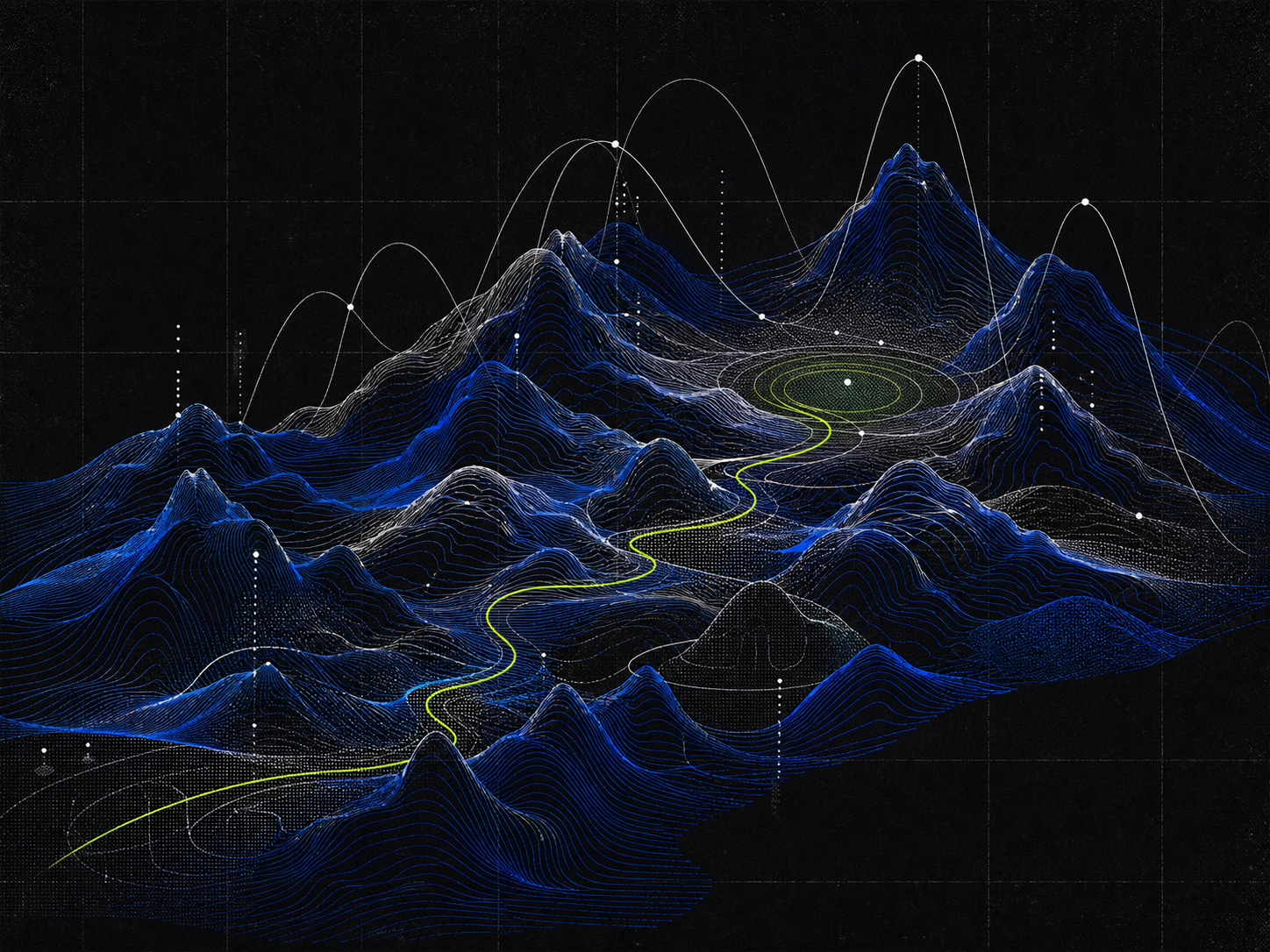
研究对象Research scope
AEGIS 研究复杂系统中的风险关系。AEGIS studies risk relationships in complex systems.
政策、产业、市场与组织信号往往共同变化。一个变量的含义取决于它与其他变量的关系、变化发生的时间,以及这条关系能否经得起进一步审查。Policy, industry, market and organisational signals often move together. The meaning of a variable depends on its relationships, when those relationships change, and whether the resulting account can withstand further scrutiny.
因此,AEGIS 把依赖结构、方向性信号和解释路径放在同一研究框架中,探索统计学习、图结构方法与序列建模的结合方式。AEGIS therefore studies dependency structures, directional signals and explanatory paths within one framework, exploring combinations of statistical learning, graph-structured methods and sequence modelling.
依赖结构Dependency structures
识别跨领域变量之间相对稳定的关系,同时区分短期共变、结构性连接与可能发生改变的关系。Identify relatively stable cross-domain relationships while distinguishing short-term co-movement, structural connection and relationships that may be changing.
方向与时间Direction and time
观察信号出现的先后、关系随时间的变化,以及方向性信息能够支持到什么程度的判断。Examine signal order, change over time and the extent to which directional information can support judgement.
解释与审查Explanation and review
让研究者能够回到变量关系、时间窗口和模型假设,检查结论从哪里产生,并识别仍然存在的不确定性。Enable researchers to return to variable relationships, time windows and modelling assumptions to inspect how a conclusion was formed and what uncertainty remains.
方法框架Method framework
变量关系、时间变化与解释路径。Relationships, temporal change and explanatory paths.
AEGIS 当前把方法研究、实验系统与真实场景评估视为同一研究议程的不同组成部分。AEGIS currently treats methodological work, experimental systems and real-context evaluation as parts of the same research agenda.
以图结构和统计关系描述跨领域变量之间的连接,为后续比较与审查保留结构信息。Use graph structures and statistical relationships to describe cross-domain connections while retaining structure for comparison and review.
通过序列建模观察关系和信号随时间的变化,不把一次性的相关结果当作稳定结构。Use sequence modelling to examine change over time rather than treating a one-off correlation as a stable structure.
比较方向性信号的稳定性和适用边界,同时保留无法由现有证据消除的不确定性。Compare the stability and boundaries of directional signals while preserving uncertainty that the available evidence cannot remove.
把模型输出连接回变量、时间窗口和关键假设,使研究过程可以被研究者进一步检查。Connect model outputs back to variables, time windows and key assumptions so that researchers can inspect the research process.
当前状态Current status
持续研究中。Ongoing research.
当前公开内容聚焦 AEGIS 方法框架与研究原型,持续推进方法验证、场景评估与应用边界研究。Public work currently focuses on the AEGIS method framework and research prototypes, with continuing validation, context evaluation and study of application boundaries.
- 项目类型Type
- 持续研究计划Continuing research initiative
- 当前工作Current work
- 方法框架与研究原型Method framework and research prototype
- 所属方向Research area
- 决策与风险智能 ↗︎Decision & Risk Intelligence ↗︎
- 评估原则Evaluation principle
- 保留不确定性、解释路径与适用边界Preserve uncertainty, explanatory paths and boundaries of use
共同研究Collaborative research
围绕真实问题、可说明的数据条件和共同评估开展合作。Collaborate around a real question, explainable data conditions and shared evaluation.
适合与研究者、高校及拥有明确风险研究场景的机构讨论。具体研究范围、数据边界与成果形式在单项合作中确认。Suitable for discussion with researchers, universities and organisations with a defined risk-research setting. Scope, data boundaries and outputs are agreed within each collaboration.
讨论联合研究Discuss collaborative research↗︎